How to Avoid a Late Night AC Breakdown in Atlanta

How to Avoid a Late Night AC Breakdown in Atlanta

The worst air conditioner failures are the ones that could have been prevented. A capacitor that was already weakening in April fails on the hottest night of July, and a household that could have caught it during a spring check instead spends a sweltering evening waiting on emergency service. This is exactly what regular 24 hour ac maintenance is designed to prevent. For North Atlanta homeowners, a modest amount of preventive care through the year quietly heads off the majority of peak-summer breakdowns, because most failures do not happen out of nowhere; they build slowly and then let go under load. Understanding what 24 hour ac maintenance actually catches, and when to schedule it, is the difference between a system that runs all summer and one that quits at the worst possible moment. One Hour Heating and Air Conditioning of North Atlanta provides this care across Alpharetta, Roswell, Sandy Springs, and the broader metro.

This article is general information about preventive HVAC care, not a repair manual. Any work involving refrigerant, sealed electrical parts, or the inside of the equipment belongs to a qualified technician.
Most Breakdowns Are Slow, Not Sudden

A capacitor weakening with age, a pitting contactor, a small refrigerant leak, and a slowly clogging drain all build for weeks before they let go under peak load, which is why a seasonal check can catch them long before they strand a household on a hot night.

Spring Is the Window That Matters

Maintenance done in spring, before the first 90-degree stretch, catches a failing part while there is still time to fix it calmly, rather than during the first heat wave when emergency calls flood every HVAC company in the metro.

Clean Coils Cut the Strain

Condenser and evaporator coils caked with Georgia pollen and dust force an air conditioner to work harder and run hotter, so cleaning them during maintenance eases the load on the very parts most likely to fail at peak demand.

Why most breakdowns are not really sudden

The case for 24 hour ac maintenance starts with a simple truth from the field: most air conditioner failures are the visible end of a problem that had been developing for weeks or months. A capacitor, the component that gives the compressor and fan the jolt they need to start, weakens gradually with heat and age before it finally cannot start the motor. A contactor, the electrical switch that tells the outdoor unit to run, pits and corrodes over time until its contacts no longer close reliably. Refrigerant leaks start small and slowly starve the system of cooling capacity. A condensate drain clogs bit by bit until it trips a safety switch and shuts the system down. None of these are truly sudden; they are slow declines that reach their breaking point under the heaviest load, which in North Atlanta is the hottest afternoon of the summer.

That is the whole logic of 24 hour ac maintenance. A technician checking the system before the season can measure a weakening capacitor, spot a pitting contactor, catch a small refrigerant loss, and clear a drain before any of them becomes a breakdown. The failure that would have stranded a family on a July night becomes a small part swapped during a scheduled visit. Prevention works here precisely because the failures are gradual enough to be caught in advance.

What a maintenance visit actually checks

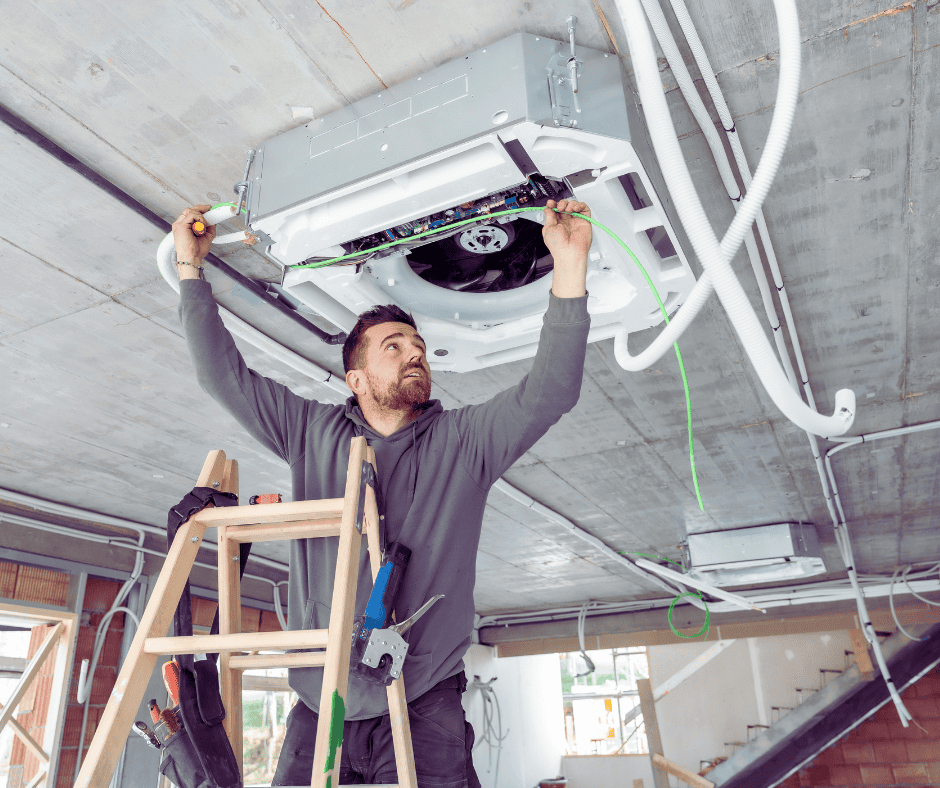
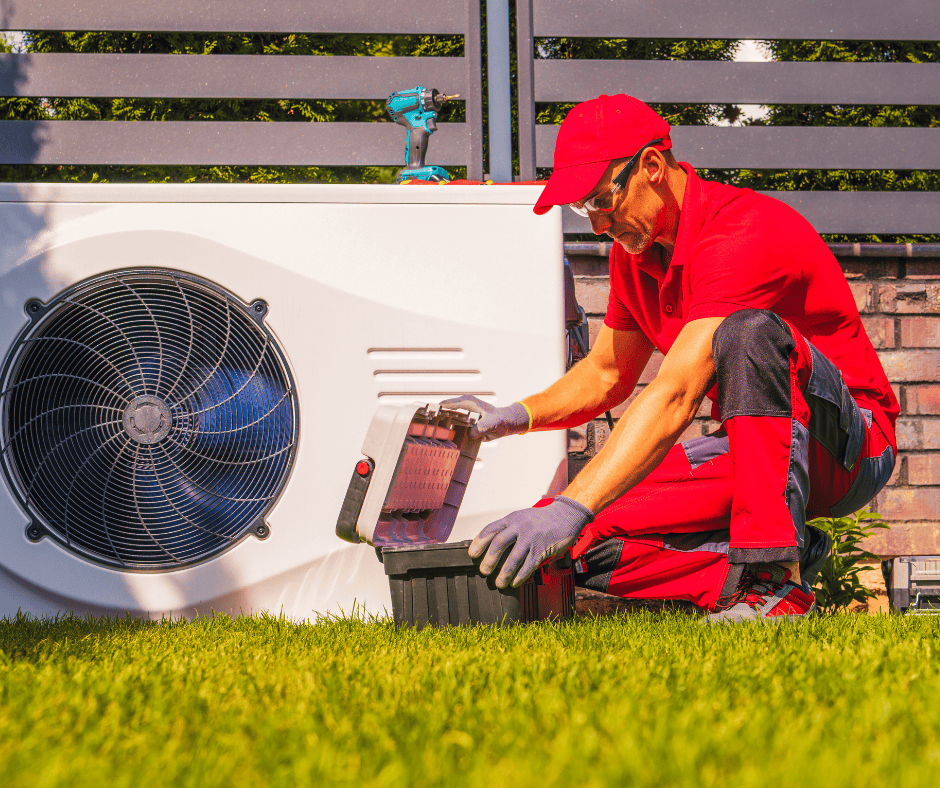
A thorough 24 hour ac maintenance visit is not a quick glance at the unit; it is a systematic check of the parts most likely to fail. The technician tests the capacitor's capacitance against its rating to see whether it is fading, inspects the contactor for pitting, and checks the electrical connections for the loose or corroded terminals that cause intermittent failures. On the cooling side, the technician verifies the refrigerant charge, which reveals a slow leak long before it cripples performance, and cleans the condenser and evaporator coils, since coils caked with Georgia pollen and dust force the system to work harder and run hotter.

The visit also covers the parts that cause the messy failures. The technician clears the condensate drain and checks the safety float switch so a clogged drain does not shut the system down or leak water, tests the blower motor, and confirms the thermostat is reading and calling correctly. Each of these checks targets a specific common failure, which is why 24 hour ac maintenance catches so much: it is aimed directly at the handful of parts responsible for most breakdowns. A homeowner does not need to know the details, only that a proper visit looks at all of them rather than one.

Timing maintenance to the Georgia season

When 24 hour ac maintenance happens matters as much as whether it happens, and the North Atlanta climate sets the schedule. The ideal time for a cooling-system check is spring, before the first stretch of 90-degree days arrives and puts the system under real load. A check in March or April catches the weakening part while there is still time to replace it calmly, rather than discovering it during the first heat wave when every HVAC company in the metro is slammed with emergency calls. Spring maintenance is, in effect, insurance bought right before the risk peaks.

The Georgia summer is demanding in a way that rewards this timing. Afternoon temperatures sit in the upper 80s and low 90s for months, and the humidity adds a heavy latent load, meaning the system works hard not just to cool the air but to pull moisture from it. A system running at full tilt all summer has no slack for a marginal part, which is why the failures cluster at peak demand. Scheduling 24 hour ac maintenance in spring means the system enters that long, hard season in its best shape rather than limping into it with a hidden weakness.

The North Atlanta homes that need it most

Some North Atlanta homes have more riding on 24 hour ac maintenance than others, and the two-story home is at the top of the list. In these houses, Georgia attic temperatures routinely climb past 130 degrees during the day and radiate heat down into the upper floor for hours after sunset, and when the upstairs return air was undersized at construction, the upper floor already runs 5 to 10 degrees warmer than the downstairs even with a healthy system. That means the air conditioner is working harder to keep the upstairs livable, and a marginal part under that extra strain is more likely to fail. For a two-story home, keeping the system in top condition through maintenance is not a luxury; it is what keeps the upstairs bedrooms usable on a hot night.

Older systems also gain the most from 24 hour ac maintenance, both because their parts are closer to the end of their service life and because a maintenance visit is the natural moment to assess whether a system is nearing replacement. A unit still running the older R-410A refrigerant, now being phased out following the post-2025 transition, is worth watching, and a technician doing routine maintenance can flag when repair economics are shifting toward replacement well before a breakdown forces a rushed decision. That advance warning is one of the quieter benefits of staying on a maintenance schedule.

How a maintenance plan makes it simple

The hardest part of 24 hour ac maintenance is remembering to do it, which is the problem a maintenance plan solves. One Hour offers the Comfort Club, a maintenance plan that keeps a system on a regular service schedule so the seasonal checks happen on time rather than being forgotten until something breaks. A plan takes the mental load off the homeowner and keeps the system in the condition that prevents breakdowns, and members typically gain conveniences like scheduled visits and included filters that keep airflow strong between visits.

  • Scheduled seasonal checks so maintenance is not forgotten until a failure
  • Testing of the capacitor, contactor, and electrical connections
  • Refrigerant charge verification and coil cleaning
  • Condensate drain clearing and safety switch checks
  • Early warning when a system is nearing the end of its life

For a household weighing a new high-efficiency system down the line, a maintenance relationship also means a company that already knows the home when the time comes, and for qualifying households One Hour can explain options including the income-based Georgia HEAR heat pump rebate. But the immediate value of 24 hour ac maintenance is simpler: a system cared for through the year is far less likely to quit on a hot night.

Schedule maintenance with One Hour before the heat

One Hour Heating and Air Conditioning of North Atlanta provides 24 hour ac maintenance and full HVAC service from its shop at 1360 Union Hill Rd Ste 5F in Alpharetta, GA 30004, serving Alpharetta, Cumming, Dunwoody, East Cobb, Milton, Roswell, Sandy Springs, and the broader North Atlanta metro. The company is licensed and insured, locally and independently operated, and backs its work with StraightForward upfront pricing so the cost is clear before any work begins, the Always On Time, Or You Don't Pay a Dime guarantee, a 100 percent satisfaction commitment, the Comfort Club maintenance plan, and a record across more than a hundred five-star reviews. Getting ahead of a breakdown is far easier and calmer than scrambling for emergency service on a hot night. North Atlanta homeowners who want 24 hour ac maintenance to keep their system running through the summer can call One Hour at (404) 721-3562 to schedule a visit or ask about the Comfort Club. This article is general information only; any repair involving refrigerant, sealed electrical parts, or the interior of the equipment should be left to a qualified technician.

Redirect to:


Frequently Asked Questions


Once a year at minimum, ideally in spring before the first stretch of 90-degree days puts the system under real load. A spring check catches a weakening part while there is still time to replace it calmly, rather than discovering it during the first heat wave when every HVAC company in the metro is booked with emergency calls. Homes that run their systems hard, like two-story homes fighting the upstairs heat, benefit most from staying on a regular schedule.
It targets the specific parts most likely to fail. A technician tests the capacitor against its rating to catch it fading, inspects the contactor for pitting, checks electrical connections, verifies the refrigerant charge to reveal a slow leak, cleans the coils, and clears the condensate drain and its safety switch. Each check aims at a common failure point, which is why maintenance prevents so many breakdowns, it addresses the handful of parts responsible for most of them before they let go.
It prevents most of them, because most failures are not truly sudden. A capacitor weakens gradually, a contactor pits over time, a refrigerant leak starts small, and a drain clogs bit by bit, then all of them reach their breaking point under the heaviest summer load. Catching those slow declines during a scheduled visit turns a July-night emergency into a small part swapped in advance. It cannot guarantee a system never fails, but it removes the most common, preventable causes.